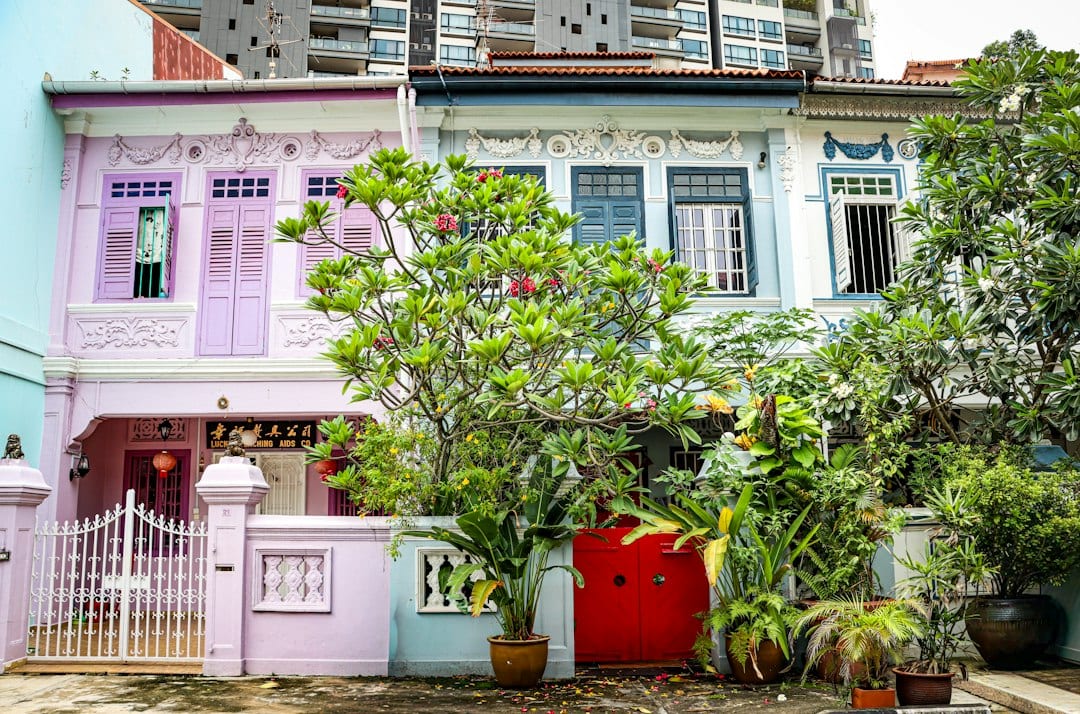
Terrace House
A row of attached homes sharing side walls. Typically the most accessible entry point into landed living, with a mix of older and newer estates across Singapore.
Personalised advice for buying, selling or investing in terrace, semi-detached, detached and Good Class Bungalow properties.
Jacky Ng, Real Estate Salesperson, Huttons Asia. CEA Reg. No. R070530B.
Jacky Ng, Real Estate Salesperson, Huttons Asia. CEA Reg. No. R070530B.
Landed housing is a distinct class of residential property in Singapore. The owner holds the title to a parcel of land, together with any structure built on it. This is different from condominium or HDB ownership, where the building sits on shared land and common facilities are managed by a strata title entity.
Landed homes come in several forms — from terrace houses arranged in a row to standalone bungalows and the most exclusive Good Class Bungalows. Tenure can be freehold, 999-year leasehold or 99-year leasehold, and each type is governed by URA planning, conservation and rebuilding guidelines.
Understanding the categories helps you compare lifestyle, space, cost and ownership structure before you shortlist.
A row of attached homes sharing side walls. Typically the most accessible entry point into landed living, with a mix of older and newer estates across Singapore.
An end-of-row terrace with additional side land or opening. Often enjoys more natural light, ventilation and privacy than a standard intermediate unit.
Two homes joined by one common wall. Usually sits on a larger land footprint than terraces and offers more side setback and garden space.
A standalone home with no shared walls. Minimum plot-size and setback requirements apply under URA guidelines, giving owners greater flexibility in design.
The most exclusive landed category, restricted to designated GCB Areas and subject to minimum plot-size criteria. Known for spacious grounds and privacy.
Landed-style living within a strata-titled development with shared facilities. The land is not individually owned; maintenance is handled by the management corporation.
Heritage properties in designated conservation areas. Renovations and additions are tightly controlled by URA, and ownership involves unique maintenance considerations.
Landed transaction activity varies widely by district, tenure and property type. Use this overview as a starting point, then request a tailored comparable-market analysis.
| Region / District | Common Landed Types | Market Character | Key Price Drivers |
|---|---|---|---|
| East Coast (D15–D16) | Terrace, semi-detached, corner terrace | Established family enclaves; strong school and park proximity. | Coastal access, MRT connectivity, land size. |
| Central / Bukit Timah (D10–D11, D21) | Semi-detached, detached, GCB | Premium stock; larger plots and proximity to nature corridors. | Plot size, tenure, exclusivity, school zones. |
| North-East (D19–D20) | Terrace, semi-detached, cluster houses | Mix of mature and newer landed supply; popular with upgraders. | Accessibility, amenities, relative affordability. |
| North (D26–D28) | Terrace, semi-detached, detached | Leafy, lower-density estates; larger plots in some pockets. | Plot ratios, future developments, aerospace hub adjacency. |
| West (D23) | Terrace, semi-detached | Relatively more affordable entry-level landed options. | Transport links, hillview/nature access, plot size. |
Source: URA REALIS / URA caveat data. Last updated: October 2026. Past transaction data is for illustration and research purposes; it does not guarantee future prices or returns. For district-level listings and transactions, see Singapore District Guides.
Each district offers a different balance of lifestyle, connectivity, schools and price points. Explore the guides to understand which landed enclave may suit your priorities.
Popular for proximity to East Coast Park, heritage shophouses and established schools.
View D15 guideA mix of established and newer landed enclaves with strong east-side connectivity.
View D16 guideRelatively newer landed supply in the north-east, popular with families and upgraders.
View D19 guideMature estates with landed pockets near amenities, schools and transport corridors.
View D20 guideProximity to nature reserves and reputable schools, with a mix of landed stock.
View D21 guideMore affordable landed options in the west, with hillview and nature access.
View D23 guideLeafy landed enclaves with a relaxed, low-density character.
View D26 guideLarger plots and newer estates in the north, with growing amenity options.
View D27 guideLanded-focused planning and adjacency to the aerospace and Seletar hub.
View D28 guideUse the filters to narrow by property type, district, tenure and size. When available, verified listings from Jacky’s portfolio will appear below.
Contact Jacky to be notified of upcoming landed homes that match your criteria.
Listing information is verified before publication. Prices, availability and details are subject to change.
Get a clear, market-grounded opinion of your property’s position — backed by recent comparable transactions and district context.
Jacky works with buyers, sellers, upgraders and investors to cut through the noise and focus on what matters for your next landed property decision.
A terrace house is part of a row and shares side walls with neighbours. A semi-detached house is paired with one other home through a single common wall. A detached house stands alone with no shared walls and usually sits on a larger plot.
A Good Class Bungalow is the most exclusive category of landed home in Singapore. It must be located in a designated GCB Area and meet minimum plot-size requirements. Foreigners generally require approval under the Residential Property Act to purchase a GCB.
Foreigners typically need approval from the Singapore Land Authority under the Residential Property Act to purchase landed residential property. Singapore citizens and permanent residents face fewer restrictions, but rules still vary by property type. Verify your eligibility with a qualified property lawyer.
Check the remaining tenure, URA zoning, plot ratio, setback and building envelope limits, conservation status, soil conditions, existing structural integrity and any unauthorised structures. Engage an architect, engineer and lawyer to verify what can be rebuilt.
Property tax is based on the Annual Value set by IRAS and the applicable owner-occupier or non-owner-occupier rate. Buyer’s Stamp Duty is calculated on the purchase price or market value, whichever is higher. Additional Buyer’s Stamp Duty may apply depending on residency and property count. Confirm current rates with IRAS or a tax professional.
Additions and alterations may take a few months, while a full reconstruction can take 12 to 24 months or longer, depending on design complexity, URA approvals, builder availability and site conditions. Timeline estimates should be confirmed with your architect and contractor.
A cluster house, or strata landed home, offers landed-style living within a strata-titled development. Residents share common facilities and the land is owned collectively by the management corporation, not by individual unit owners.
Get personalised, data-backed advice from Jacky Ng.
All information provided is for general reference only and does not constitute financial, legal or real-estate advice. Prices, transactions and availability are subject to change. Please verify details independently.
Jacky Ng, Real Estate Salesperson, Huttons Asia Pte Ltd. CEA Reg. No. R070530B. Transaction data sources: URA REALIS / URA caveat data (last updated October 2026, illustrative).